Header Image
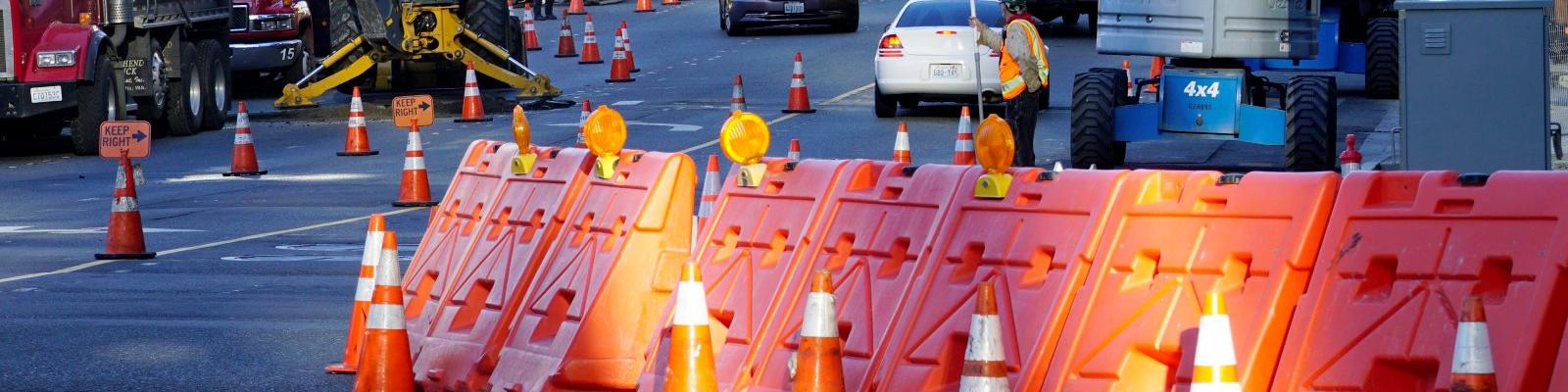
Public rights of way include all public streets and property dedicated to use for streets, together with property reserved for public utilities, transmission lines and extensions, walkways, sidewalks, bikeways or equestrian trails. The Transportation Department offers additional information about right of way use permits and right of way boundaries.
- Commercial Development: For use of the right of way associated with commercial projects, multifamily development or plat infrastructure. These uses could include hauling, parking and staging, whether there is construction in the right of way or not. (TN)
- Government Projects: This permit may be issued to any government agency or city department, or to a contractor working under a city contract for a capital or maintenance project. (TK)
- Residential: Work in the right of way associated with existing single family home construction or major remodels, including installation of driveways, driveway re-construction or relocation, landscaping, fences and walls, and city water/sewer/storm connections. (TG)
- Street Use Permit: Uses of the right of way such as sidewalk cafes, street runs, non-motorized races, parades and processions, assemblies, block parties and street dances, parking, loading zones, annual trucking permits and over-sized loads, roadway, land or sidewalk work or closures that will not involve the physical disturbance of the right of way and is for applicants other than franchise utilities. (TE)
- Franchise Permit: For use of the right of way for franchise utility work and those operating under an existing right of way use agreement. (TJ)
- Small Wireless Facility: Issued for the co-location of small wireless facilities and related equipment on existing poles in the city's right of way under a Small Wireless Facility permit. (TJ)
- WCF in Right of Way-Franchise Utility Permit: Installation of a new wireless communication facility or modification of an existing wireless communication facility in the right-of-way. This includes all work in the public right of way associated with such activity, including but not limited to temporary traffic control surface disturbance and construction staging. (TJ)
- Work near the Link Light Rail: Starting as early as November 1, 2023, Link right-of-way worker safety training and a permit from King County will be required for all individuals engaged in activities within 10 feet of the rails (unless separated by a permanent physical barrier, such as a wall, fence, or concrete barrier) or overhead catenary system (OCS).