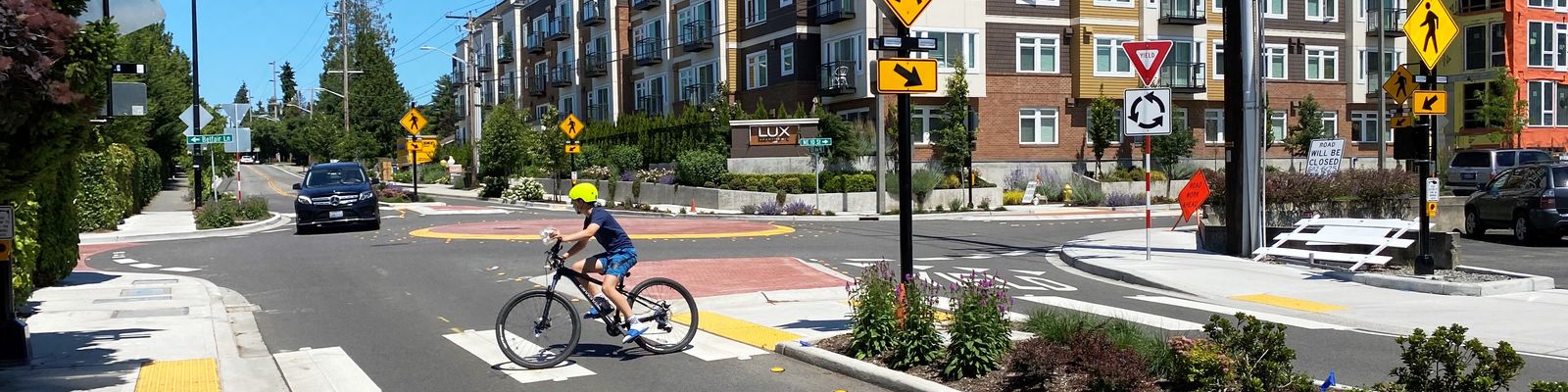
The Transportation department recently streamlined all transportation capital projects under the unified Transportation Mobility and Safety Portfolio to improve efficiency, provide greater transparency and deliver consistent prioritization of projects ranging from neighborhood safety upgrades to major multimodal corridors.
All projects are categorized into capital program areas, making it easier for the community to understand how project investments are organized and what stage a project is in — whether that is planning, design or construction.
| Program Area | Objectives |
|---|---|
Pedestrian & Bicycle Mobility
| Closing sidewalk gaps, adding safe crossings, modernizing accessibility features, and building comfortable bike facilities for all ages and abilities. |
| Neighborhood Mobility | Improving safety and livability in neighborhoods through traffic calming, safer routes to school, speed reduction strategies, and localized safety fixes. |
| Vehicle Mobility | Improving the safe, efficient flow of traffic on key corridors and at intersections. These projects use signal technology, strategic widening, and smarter curb management to improve vehicle travel reliability. |
| Major Projects | Delivering multi‑phase, city‑shaping projects that strengthen multimodal access and prepare Bellevue for long‑term growth. |
| Preservation and Reconstruction | Maintaining and rebuilding aging infrastructure to prevent failures, extend the life of major corridors, and keep the whole system reliable. |
How to get involved
- Take the Transportation Investments Survey, open until Aug. 20. The city wants to hear which types of projects you believe should be prioritized with available funding and potential new funding. Your input will help shape the funding levels the Transportation Department recommends for the five capital program areas in the upcoming budget process. The survey is available in seven languages and takes about 5 to10 minutes to complete, with all responses, including answers to optional demographic questions, anonymous.
- Visit our table at an upcoming community event. Transportation staff will be attending the upcoming community events to share our vision for future transportation investments and answer your questions.
- July 2: Bellevue Famers Market - Bellevue Presbyterian Church
- July 4: Bellevue Family Fourth - Downtown Park
- July 11: Eastgate Block Party - Newport Way Library
- July 17: Tabling - North Bellevue Community Center
- July 18: Bellevue Fire Department Open House - Station 1
- Aug. 5: Tabling - Mini City Hall
- Aug. 9: Bellevue International Festival - Crossroads Park
- Attend an upcoming information session. Transportation staff will host two information sessions to share the new program area framework and provide an overview of needed investments to prepare Bellevue for continued growth. Registration is encouraged but not required.
- Request a briefing for your community group or neighborhood association. Please email movingforward@bellevuewa.gov for scheduling.
Preparing for needed investments in our transportation system
The strategic alignment of projects into the five program areas above will help the city better manage a transportation system that is experiencing growth and new eras of opportunity. With new housing, expanding job centers and the opening of light rail, people across the city are traveling in new ways. To keep Bellevue as one of the most livable cities in the region, the city must make intentional and steady investments in the transportation system to keep everyone moving comfortably and efficiently, no matter how they choose to travel.
Bellevue has a long record of responsible financial stewardship and delivering projects on time and on budget. Even with that strong foundation, the needs of a growing city have outpaced what current funding can support.
Several factors make this moment critical:
- More people are using our streets, sidewalks, bike lanes and transit network. Current and future growth in neighborhoods like Wilburton, BelRed, and Downtown continues to increase travel demand. Bellevue is expecting 70,000 new jobs and 35,000 new housing units by 2044.
- Housing and job growth requires transportation growth. As more people live in Bellevue, the city must ensure they can travel safely to schools, transit, jobs, parks and services. Not all of this travel growth can be accommodated by drive alone vehicle trips, requiring investments in multimodal transportation and strong connections to regional mass transit and trails.
- Infrastructure costs continue to rise. The cost for construction, materials and labor continue to rise over time, meaning delayed projects will be even more expensive later.
- Community expectations are clear. The city is committed to delivering safer crossings, traffic calming, better access to transit, reliable travel times and a connected network for people walking and rolling in Bellevue.
Additional funding needed for transportation investments
Because the needs of a growing city now exceed what existing funding can support, Bellevue must secure a dedicated and reliable revenue source to continue delivering essential transportation projects.
The primary revenue tool under consideration is the Transportation Benefit District which serves as a dedicated, stable funding source specifically designed to generate the long-term revenue needed to continue delivering projects.
The Bellevue City Council took the administrative step of establishing the Transportation Benefit District on July 17, 2023. The next steps are to assume and ultimately fund the district in the 2027-28 budget cycle.