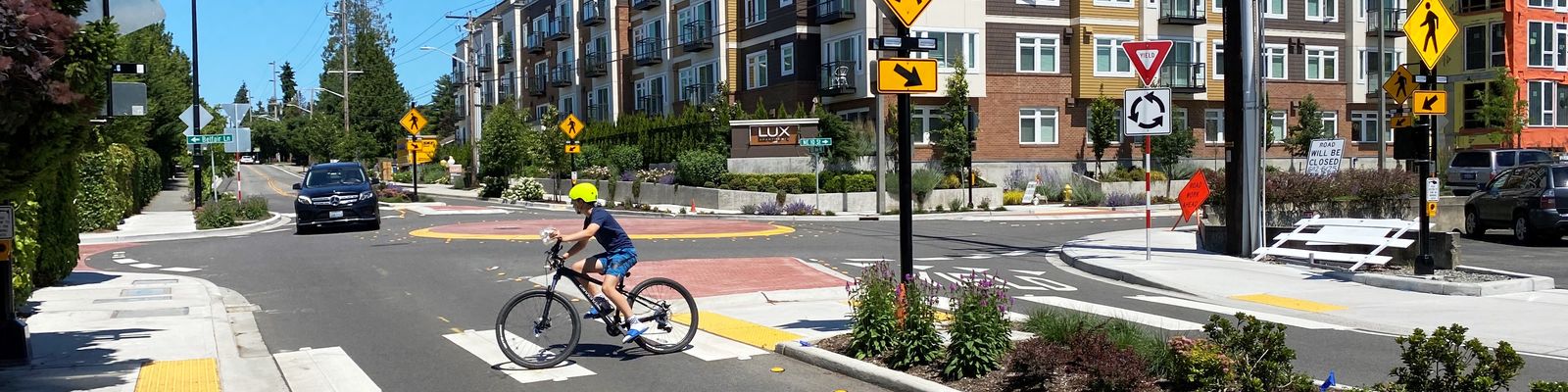
Bellevue’s Vision Zero Initiative is dedicated to ensuring everyone gets home safely—no matter how they travel. The goal is to eliminate traffic deaths and serious injuries on city streets by 2030. A key part of achieving this goal is encouraging safe speeds. When drivers slow down, everyone benefits. Even small reductions in speed can significantly reduce the likelihood of crashes and the risk of serious injury or deaths.
To support these efforts, in December 2025, the city council directed staff to expand the city’s automated traffic safety camera program. In addition to red-light and school speed zone cameras, the program will now include speed safety cameras at locations with a higher risk of crashes. These locations include areas near hospitals, parks, school walk zones, and corridors with a documented history of speed-related crashes, consistent with state law (RCW 46.63.210-.260).
Staff analyzed 95 candidate sites using crash, speed, and citation data and engaged the community through multiple outreach efforts. For the initial 2026 deployment, the city will install 14 speed safety cameras at the following seven locations.
2026 Speed Safety Camera Locations
- Bellevue Way SE, adjacent to South Bellevue Park and Ride
- Coal Creek Parkway SE, between Forest Drive SE and SE 60th Street
- Forest Drive SE, between SE 54th Place and Coal Creek Parkway
- 116th Avenue NE, between NE 21st Street and Aegis Living Bellevue Overlake (1845 116th Ave NE)
- 148th Avenue NE, between NE 13th Place and NE 10th Place
- Forest Drive SE, between 138th Avenue SE and SE 60th Street
- NE 8th Street, between 167th Avenue NE and 168th Place NE
View a map of the seven locations.
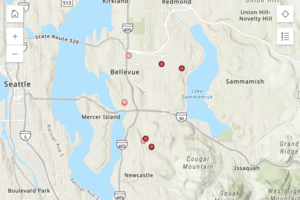
Cameras Status Map
This dynamic map shows the current status of all 14 Phase 1 cameras, including whether each camera is in service or planned, along with its evaluation matrix score.
This initial phase allows the city to raise public awareness, monitor program effectiveness, and confirm readiness for future deployments, supporting Bellevue’s commitment to Vision Zero.
-
Timeline
- Spring 2026
- Notify the public about the first phase of camera installations and install advance warning signs and speed safety cameras.
- Summer 2026
- Activate cameras with a 30-day warning period and begin issuing citations.
- Fall 2026 – early winter 2027
- Monitor camera operations and evaluate program outcomes.
Frequently Asked Questions
How were locations selected?
Bellevue used a data-driven process to identify and prioritize locations for speed safety cameras, considering documented safety concerns, including crash history and speeding patterns, along with applicable state law requirements. Cameras are installed along roadway corridors, not at intersections. Location-selection considerations included corridors with a history of speed-related crashes and proximity to parks, hospitals and school walk zones.
For more information about how these locations were selected, check out this video:
Are speed safety cameras effective at reducing crash risks?
Yes. According to the U.S. Federal Highway Administration, speed safety cameras are an “effective and reliable technology to supplement more traditional methods of enforcement, engineering measures, and education to alter the social norms of speeding.” Jurisdictions that have implemented these cameras have reported crash reductions of up to 54% for all crashes and 48% for injury crashes on urban arterials.
These results reflect findings from other locations and do not guarantee the same outcomes in Bellevue. The city will evaluate its program’s performance and safety outcomes over time.
Speed safety cameras are one component of Bellevue’s broader traffic safety strategy. The city is also committed to improving roadway design, lowering speed limits, and expanding public education as part of a Safe System approach to achieving Vision Zero.
When will the new cameras be turned on?
The first phase of Bellevue’s expanded speed safety camera program includes seven locations. The first four locations began issuing citations on October 5, 2026, following an initial warning period. The remaining three locations will begin issuing citations after installation and completion of their respective warning periods.
Bellevue will roll out the cameras in phases to evaluate program performance, raise community awareness, and support effective program operations. Future phases may expand to additional high-risk locations, based on safety data, equity considerations, and community input, subject to city decisions and available resources.
What speed will trigger a citation?
A Notice of Infraction may be issued when a vehicle is detected traveling 8 mph or more above the posted speed limit. The cameras use radar to measure vehicle speeds and capture evidence of potential violations. Bellevue Police Department staff review each potential violation to verify that the evidence meets legal and procedural requirements before issuing a Notice of Infraction.
The program’s goal is to reduce dangerous speeding and prevent serious crashes as part of Bellevue’s broader Vision Zero strategy.
How will I be notified of the new cameras?
To ensure transparency and public awareness, the city provides information about the program and camera locations through public communications, including:
- Advance notifications through city newsletters, website updates, and social media
- Community engagement opportunities to learn about the program and ask questions
- Clearly posted signage near camera locations, as required by law
For future changes to the program, the city will provide clear public communication consistent with applicable state law and the nature of the change.
How much are fines?
The fine is $124 for a speed safety camera violation, or $248 for a violation in one of Bellevue’s three existing school zones. Eligible individuals receiving qualifying public assistance or Washington Women, Infants, and Children (WIC) benefits may request a 50% reduction in the fine under state law. For eligibility requirements and instructions, visit King County District Court.
Are these speed cameras the same as Flock cameras?
No. Bellevue’s speed safety cameras serve a different purpose from Flock systems and other automated license plate reader (ALPR) systems used to identify vehicles for broader investigative purposes.
Bellevue’s speed safety cameras use radar to measure vehicle speeds and capture images of the rear of a vehicle when the violation threshold is met. License plate information is used to identify the registered owner associated with a potential speeding violation. The system is designed to enforce speed limits, not to track vehicle movements or identify drivers, and it does not use facial recognition.
In accordance with RCW 46.63.220, the City of Bellevue manages program data subject to applicable legal requirements and contractual restrictions. Data access, use and retention are subject to applicable legal requirements and contractual safeguards.
What technology do Bellevue's speed safety camera use, and how do they measure speed?
Bellevue’s speed safety cameras are supplied and operated by Verra Mobility. The program uses two types of equipment:
- Fixed cameras: Halo 2.0 units mounted on poles or mast arms.
- Transportable cameras: NK7 units placed on the ground that can be moved between locations.
Both types use radar to measure the speed of vehicles in the travel lanes they monitor. The cameras are installed along roadway corridors, not at intersections. For information about where the cameras are located and how those locations were selected, see “How were locations selected?”
What information can be collected by speed safety cameras?
When a vehicle is detected traveling 8 mph or more over the posted speed limit, the system captures evidence of a potential violation, including:
- Vehicle speed
- License plate number
- Date, time and location
- Images and a short video clip documenting the event
The record is transmitted securely to Verra Mobility for initial processing and review. A law enforcement reviewer then examines each event and determines whether to authorize a Notice of Infraction, which is mailed to the vehicle’s registered owner through King County District Court.
Registered owners can view available images and video at ViolationInfo.com using the Notice Number and PIN printed on the notice. Recipients may contest an infraction by following the instructions provided with the notice.
Under RCW 46.63.220, images and related information collected through automated traffic safety cameras are subject to restrictions on public access, use and retention. They may be used for authorized enforcement purposes and may not be used in court proceedings unrelated to the applicable infraction.
Do the cameras photograph every vehicle that passes, and are images of vehicles that are not speeding kept?
No. Radar measures the speed of passing vehicles, but the cameras capture images only when a vehicle meets the violation threshold of 8 mph or more over the posted speed limit. Images of vehicles below that threshold are not captured or retained.
For program evaluation, the system retains anonymous speed and traffic-volume totals that do not include images or license plate information.
Why do some drivers see a small flash of light as they pass the cameras?
The flash is built into the camera unit and may activate when the system captures images of a potential violation. It illuminates the rear of the vehicle and its license plate to help produce clear images in different lighting conditions.
A flash does not necessarily mean a citation will be issued. Each potential violation is reviewed before a Notice of Infraction is mailed.
Will photo enforcement tickets affect my driving record or insurance?
No. Automated speed enforcement tickets in Bellevue are classified as civil infractions, similar to parking violations. They do not go on your driving record, nor do they impact your insurance rates.
How does the speed safety camera program promote fairness?
Bellevue considers equity as part of its speed safety camera program and will evaluate the program’s safety outcomes and equity impact over time to identify opportunities for improvement. Community feedback will help inform future program adjustments.
The program applies a consistent speed threshold to identify potential violations and reduce dangerous speeding, with the goal of improving safety rather than generating revenue.
Individuals who meet the eligibility requirements for qualifying public assistance or Washington’s WIC nutrition program may request a 50% fine reduction under RCW 46.63.220. Applicable deadlines and eligibility requirements should be confirmed with King County District Court.
Documents
- Speed Safety Camera Program Operations Guide - Volume 2
- Speed Safety Camera Program Operations Guide - Volume 1
- Speed Safety Camera mailer (8.2026)
- Speed Safety Camera Expansion Contract (7.22.2026)
- City Council Regular Session (7.21.2026)
- Program Expansion Engagement Report
- Camera Selection Evaluation Criteria
- City Council Study Session (12.2.2025)
- Program expansion flyer (2025)
- Phase 1 map Locations
