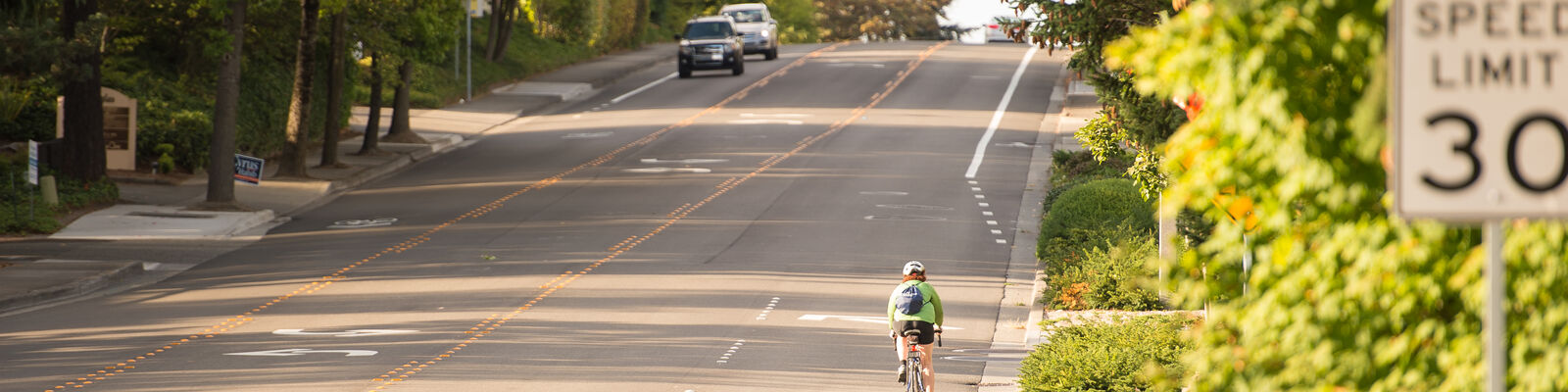
Safe Speeds Bellevue is a new program to improve safety and support Vision Zero by evaluating speed limits and reducing speeds on city streets. The initial phase of Safe Speeds Bellevue will review speed limits on all city streets that currently have a speed limit of 30 mph or more.
Reducing speed limits is a practical and effective way to make streets safer. Lower speeds decrease the likelihood of a crash occurring and the severity of a crash when it does occur. Setting safe speeds reduces the frequency of all crashes, not just speeding-related crashes. Reducing speed limits is proven in Bellevue, Seattle and other cities to effectively reduce high-end speeding.
Safe speeds are also an essential component of the Safe System approach. This approach was adopted by the council in 2020 and provides a framework for Bellevue to reach the adopted Vision Zero goal of eliminating traffic deaths and serious injuries on city streets by 2030. You can learn more about the Safe System approach on our Vision Zero webpage.
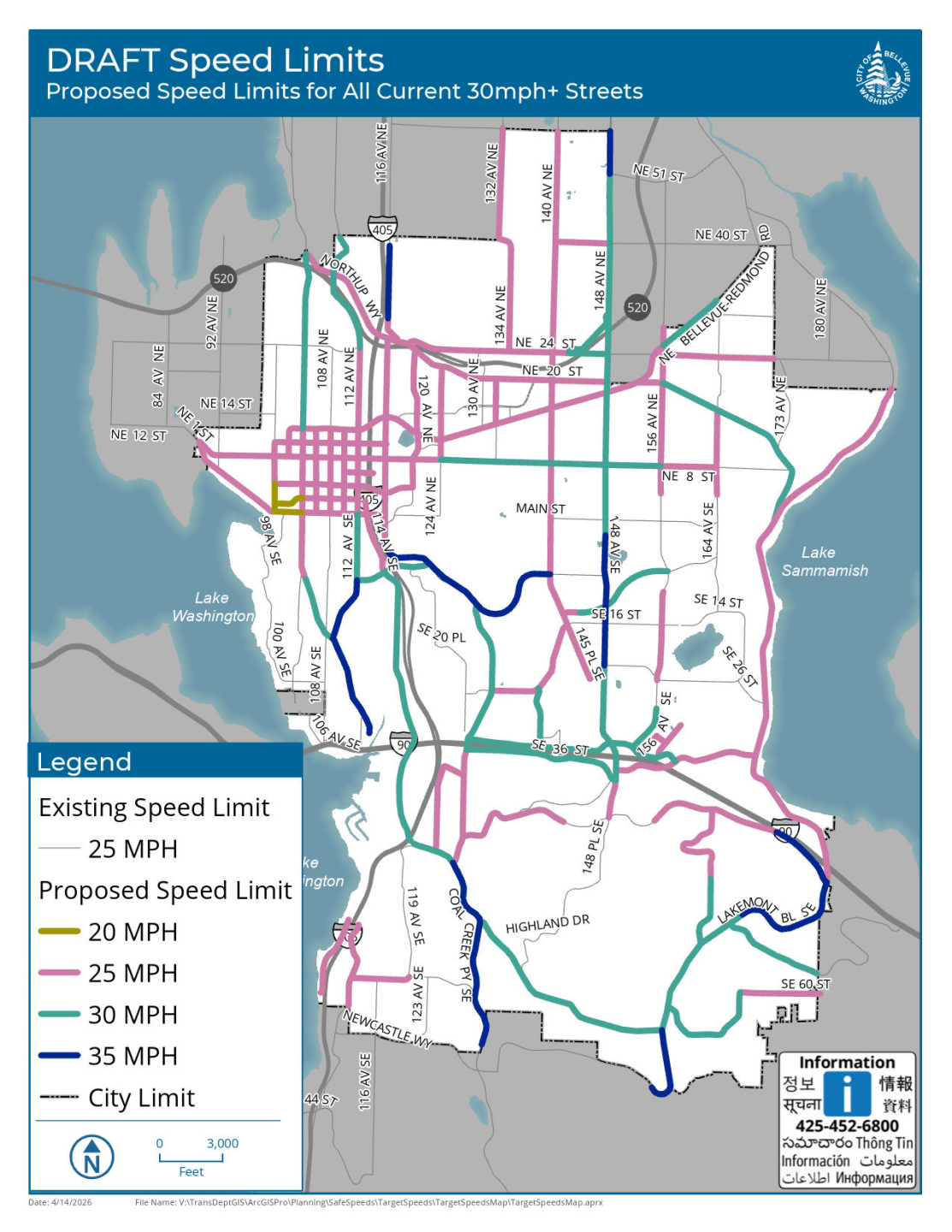
Current status
In 2025, the city council directed staff to reduce speed limits on four corridors, initiate public outreach and evaluate the speed limits on all streets with a speed limit of 30mph or greater. Using national best practices, staff developed proposed speed limit reductions. The proposed speed limits, the findings from the four evaluation corridors and an outreach summary were presented to the city council in January 2026.
Staff are now conducting public outreach about the proposed speed limits, which will be presented to the council in Summer 2026 for approval. All speed limit changes must be approved by the city council.
What streets are we looking at and why?
The initial phase of Safe Speeds Bellevue focuses on city streets that currently have a speed limit of 30 mph or higher. Generally, these are the streets that take you to daily destinations, like jobs, grocery stores, healthcare, shopping areas, recreation areas, as well as connecting to the freeway system. These streets are a focus because although they are a minority of streets, they account for the majority of traffic crashes. In Bellevue, almost 90% of fatal and serious injury crashes happen on streets with speed limits of 30 mph or higher. However, these streets are only 25% of total road mileage.
Safe Speeds Bellevue will not be reviewing state highways or private roads. In 2024, Bellevue City Council passed an ordinance changing the speed on most local streets from 25 to 20 mph, with implementation planned for 2026.
How to get involved
The project team will be sharing information and answering questions at a variety of online and in-person events. They will be listed here as they are scheduled.
- February 20, 6-8 p.m. Crossroads Community Center: Cocoa, Coffee and Crafts - 16000 NE 10th St, Bellevue, WA 98008
- March 28, 10 a.m.-2 p.m. Bellevue Downtown Station and City Hall Plaza: 2 Line Crosslake Connection Opening Celebration - 450 110th Ave NE Bellevue, WA 98004
- July 4, Bellevue Downtown Park: Bellevue Family 4th - 10201 NE 4th St Bellevue, WA 98004
Are you part of a community group that wants to host our team to hear more about the project and ask questions? Please email safespeeds@bellevuewa.gov to schedule a time.
Online
- Visit Engaging Bellevue to take a short survey on the proposed speed limit reductions and the experience with the evaluation corridors.
- Explore the frequently asked questions below.
- Submit a question or comment using the virtual comment box below.
- Watch our presentation to the council
- Watch our video overview:
Timeline
Safe Speeds Bellevue is the next step in the city’s efforts to improve safety for everyone who uses our transportation network.
- 2026: Safe Speeds Bellevue will propose speed limits for all 30+ mph roads.
- 2025: Safe Speeds Bellevue was introduced at the City Council meeting on May 20. At this meeting, the council directed staff to begin outreach on Safe Speeds Bellevue. They also directed staff to prepare an ordinance to reduce the speeds on four arterial streets and evaluate the impacts. In July 2025, the speed limit on portions of 124th Avenue Southeast/Southeast 38th Street and Northup Way from Bellevue Way to 120th Avenue Northeast were reduced from 35 to 25 mph. The speed limit on Village Park Drive and a portion of Northeast 40th Street will be reduced from 35 to 30 mph. Staff used Safe Streets and Roads for All (SS4A) grant funding to conduct citywide speed studies. Staff conducted before-after studies on all four corridors and found a decrease in high-end speeding (40 mph or higher) between 19%-42% for all corridors.
- 2024: The council approved a new Vision Zero Safe Speeds Program capital budget that allocated $4.7 million for safe speeds work from 2025-2030.
- 2024: The council passed an ordinance lowering the speed limit on most local streets to 20 mph. This project is currently in design, and signs are anticipated to be updated in 2026.
- 2023: The USDOT awards the City of Bellevue $2.8 million through an SS4A grant, which includes funding to conduct citywide speed studies.
- 2021-2023: The Transportation Department created the Speed Management Plan.
- 2020: The council passed a resolution approving the Safe System approach and strategies to move Bellevue towards Vision Zero. The Vision Zero Strategic Plan was approved by the City Manager, which includes information and strategies for Safe Speeds.
- 2015: The council passed a resolution providing a framework to pursue Vision Zero.
In future phases of Safe Speeds Bellevue, the city anticipates implementing physical changes on streets to encourage safe speeds by design. Staff will also monitor speed and crash data citywide to track progress towards the 2030 Vision Zero goal and identify targeted street improvements.
Frequently Asked Questions
What streets were evaluated for lower speeds?
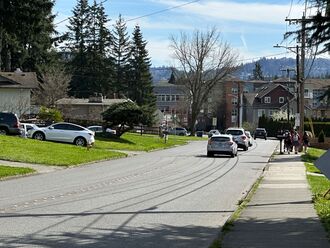
All streets in Bellevue that have a speed limit of 30 miles per hour and more in 2025 were evaluated through Safe Speeds Bellevue. The map above shows all the locations.
What did the city learn from community input?
Through public outreach, staff heard that there is interest in prioritizing speed management in areas where people are walking and biking, such as school zones and commercial areas, as well as corridors where people have been killed or seriously injured. The Community Engagement Report provides more detail on the public outreach conducted in phase 1.
How were speed limits determined?
The proposed speed limits were identified by evaluating all 30mph or higher streets considering two factors: conflict density and activity level:
Conflict Density
Conflict Density is how frequently potential conflicts arise between different road users. It is split into two categories: Modal Mixing and Crossing Point Density.
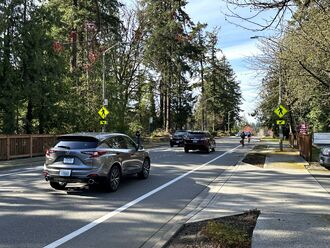
Modal Mixing looks at how people using different travel modes, like people walking, rolling, bicycling and driving, interact with each other. An example of low modal mixing is a street where people are walking on a sidewalk separated by a landscape strip, meaning there is less opportunity for conflict between people walking and driving. An example of high modal mixing would be where people are walking on a paved shoulder next to people driving. Generally, higher modal mixing supports lower speed limits.
Crossing Point Density measures how many opportunities there are for people to cross or enter the street where people are driving. If there are lots of driveways where people driving need to enter the street, and intersections and other marked crosswalks where people walking and rolling may be crossing the street, the Crossing Point Density will be higher. Generally, more crossing points support lower speed limits.
Activity Level
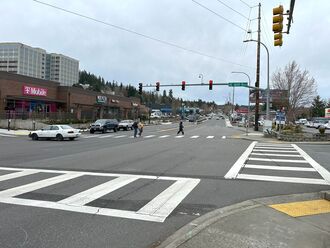
Activity Level describes how active a street is now or is expected to be in the near future. It considers the adjacent land uses, what sort of public spaces are next to the street, current or future bike routes, transit routes and curbside demand (ex. parking, delivery drivers). Generally, more activity supports lower speed limits.
Have other streets in Bellevue already had their speed limits lowered?
Three neighborhoods in Bellevue (Surrey Downs, East Bellevue Greenway, and parts of Eastgate around Tyee Middle School) had speed limits on local streets reduced from 25 to 20 mph. Each of these changes reduced high-end speeding. In 2024, The council passed an ordinance lowering the speed limit on most local streets from 25 to 20 mph, and signs are anticipated to be updated in 2026.
In 2025, the speed limit on 130th Avenue Northeast (Bel-Red Road to Northeast 24th Street) was reduced from 30 to 25 mph after council passed an ordinance in October. In 2025, the council also passed ordinances lowering the speed limit on most of Coal Creek Parkway from 40 to 35 mph. This speed limit change is planned for spring 2026, when the new signs will be installed.
Do lower speed limits improve safety?
Yes. Lower speed limits have been shown to reduce the speed people drive, especially high-end speeding. In Bellevue, reducing local street speed limits in the Eastgate neighborhood from 25 mph to 20 mph led to a 19% decrease in people driving 30 mph or more. Driving at a lower speed reduces braking distance and increases the cone of vision for people driving, allowing drivers to see more of the street and travel a shorter distance when reacting to a change. Crashes at lower speed limits are less forceful and are less likely to result in a fatal or serious injury. Lower speed limits have resulted in fewer overall crashes and fatal and serious injury crashes in cities across the US. In Seattle, reduced speed limits and increased speed limit signage resulted in a 22% decrease in all crashes and an 18% decrease in injury crashes, as well as a 54% decrease in high-end speeding.
What if people don’t slow down after speed limits are lowered?
In Bellevue, Seattle and many other cities across the US, a reduction in the speed limit and increased speed limit signage alone reduced the speeds that people were driving. However, if people do not slow down after the speed limits are lowered, there are a variety of countermeasures the city can use to encourage driving at lower speeds. This includes changes to the street like narrowing lanes or adding speed cushions, as well as adding technology such as radar feedback signs or speed safety cameras. A toolbox of countermeasures is provided in the Speed Management Plan. The council approved a new Vision Zero Safe Speeds Program capital budget that allocated $4.7 million for safe speeds work from 2025-2030, which can be used to fund these countermeasures.
How are speed limits enforced?
Speed limits in Bellevue are enforced by the Bellevue Police Department. Speed limits are also enforced in some locations in Bellevue with automated photo enforcement. The Transportation Department is currently assessing existing policies on automated photo enforcement. You can request enforcement at a specific location through the Traffic Service Request form.
When would new speed limits go into effect?
Speed limits on four streets were reduced in summer 2025. The speed limit on portions of 124th Avenue Southeast/Southeast 38th Street and Northup Way between Bellevue Way and 120th Avenue Northeast was reduced from 35 to 25 mph. The speed limit on Village Park Drive and a portion of Northeast 40th Street was reduced from 35 to 30 mph. Currently, it is anticipated that further speed limits changes will begin in 2027, after they are approved by the council and updated with new signs.
Documents
- City Council (January 27, 2026): Agenda memo, Safe Speeds Bellevue Community Engagement Report, Draft Speed Limits Map, Draft Speed Limit Reductions Map, Speed Limit Setting Methods
- Community Engagement Report, Appendices
- Flyer (July 2025)
- Evaluation corridors speed limit reduction mailers (June 2025)
- 124th Avenue Southeast/Southeast 38th Street (English, 简体中文, 繁體中文, 한국어
- Northup Way from Bellevue Way to 120th Avenue Northeast (English, 简体中文, 繁體中文, 한국어, Español, Русский)
- Village Park Drive (English, 简体中文, 한국어, Español)
- Northeast 40th Street from 140th to 148th Avenues Northeast (English, 简体中文, 繁體中文, Español, Русский, తెలుగు)
- Map of existing speed limits
- City Council (May 20, 2025): Agenda Memo, Map of Four Evaluation Streets, Map of Bellevue Streets with a Current Speed Limit of 30 MPH or Higher, CIP Project Description (PW-R-219), Proposed amendments to Chapter 11.32 of the Bellevue City Code