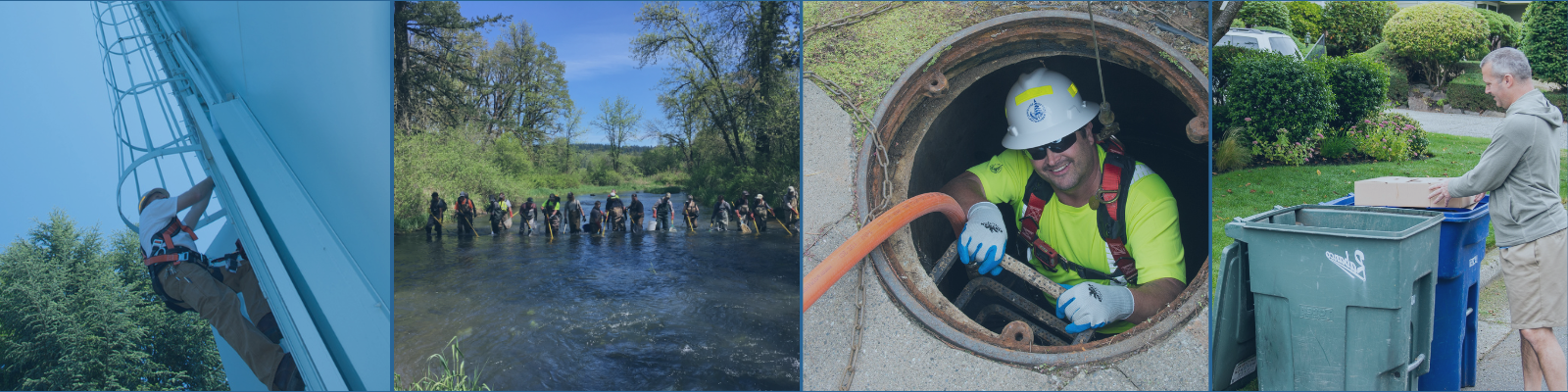
Bellevue Utilities six-year Capital Improvement Plan is updated every two years during the budget process. Utilities CIP projects include replacement of aging pipes, pumps and reservoirs as well as construction of new ones for a growing Bellevue. These projects support Bellevue’s essential utility services — drinking water, wastewater, surface water and stormwater services — helping to ensure Bellevue residents continue to receive the services they rely on now and in the future.
Community Engagement
Bellevue Utilities customers are invited to learn about and provide input on Bellevue Utilities’ proposed capital projects budget for 2027-32 through a series of Community Connect open houses this month.
These informal, drop-in events offer an opportunity to explore how the budget supports safe, reliable water, and sewer and stormwater services, and what it means for customer rates. All customers in the Bellevue Utilities service area, which includes some neighboring cities, can talk directly with Utilities staff, ask questions and share feedback ahead of City Council review of Utilities proposed budget and rates later this year.
Community Connect Open Houses
- Wednesday, May 6, Mini City Hall, 1:30–3:30 p.m.
- Friday, May 15, North Bellevue Community Center, 12–6 p.m.
- Wednesday, May 20, South Bellevue Community Center, 4-6 p.m.
- Wednesday, May 27, City Hall, 11:30 a.m.–1:30 p.m.
Virtual Community Meeting
Thursday, June 11, Virtual Community Meeting, 6-7 p.m.
Utility bills pay for more than water
Bellevue Utilities provides essential drinking water, wastewater, and storm and surface water services that meet the needs of our growing community.
Our service to our customers
- Deliver essential high-quality drinking water. We maintain over 600 miles of water main pipes and 24 reservoirs that can store over 40 million gallons.
- Protect the environment. We protect over 90 miles of open streams and over 860 acres of protected wetlands, supporting fish and wildlife habitat.
- Reduce flooding. We manage flood controls and damage from storms.
- Prevent sewage overflows. We maintain over 600 miles of sewer pipes that safely deliver wastewater to King County treatment facilities.