Properly inflated tires protects salmon

All tire shops – whether you purchased your tires from them or not – will check and fill your tires at zero cost. As the weather gets cold in fall and winter, you should expect the air in your tires to contract and require air.
Salmon? How does inflating my tires protect salmon?
Scientists recently discovered that a chemical in tires called 6PPDQ is acutely toxic to aquatic species. This chemical has been found to be lethal to salmon fry (or baby salmon).
Rainwater picks up tire dust and particles with 6PPDQ in it as it washes across the hard surfaces of our driveways, streets and parking lots. Rainwater, or runoff, flows into storm drains and our local streams without treatment, which goes into Lake Washington and Lake Sammamish, and eventually to the greater Salish Sea.
What can I do?
Keeping your tires inflated to prevent shedding dust and particles is the best way to protect salmon right now. Here are a few ways to keep your tires full and some tire care tips:
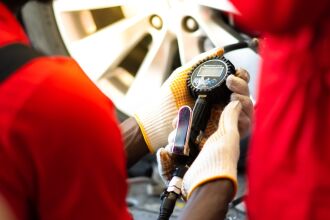
- Pull Right In: All tire shops – whether you purchased your tires from them or not – will check and fill your tires at zero cost. Really! Some auto shops will as well. No appointment needed.
- Check Regularly: Check your tire pressure (PSI) at least once a month.
- Warning – Warning: Some vehicles show a general dashboard warning if the tire pressure is low – this is typically urgent. If you see this warning, you should look at your tires before driving. If you are already driving, pull over right away to check. Driving on a low or flat tire can cause damage to your vehicle or even cause an accident.
- Weather Changes: As the weather gets cold, you should expect the air in your tires to contract and require air.
- Tire Pressure: The recommended tire pressure (PSI) for your vehicle is usually found on a sticker on the inside of the driver’s door. There is also a tire pressure number shown on the sidewall of the tire itself.
- Before Sensors: If your vehicle is older and without sensors and a warning system, make it a habit to look at your tires when you drive it.
- DYI Air Refill: Most gas stations have tire air refill stations that operate with quarters and some take debit/credit cards. Note: the pressure gauges are not always accurate at DYI gas stations.
What does the science say?
The chemical 6PPD in tires was meant to prevent tire surface degradation from ozone and extend tire life. However, 6PPD is chemically changed through oxidation, forming 6PPD-quinone (6PPDQ). 6PPDQ sheds from tires in the form of dust and small particles with road friction.
Learn more about 6PPDQ from the Washington State Department of Ecology.
Scientists are currently still studying 6PPDQ and its effects, as well as looking for a solution.
More car care for local clean streams and lakes


Only Rain Down the Drain
Storm drains capture rainwater from surfaces and deliver it directly to Lake Washington and Lake Sammamish without being filtered or treated through a series of connected pipes, streams, culverts and ditches called our stormwater system. The system was created to prevent flooding in our neighborhoods and community.
The sewer system is a completely separate series of pipes that connect directly to homes and buildings collecting used water from our indoor drains and appliances, such as sinks, washing machines and toilets. The sewer system transports our used indoor water and sewage to a wastewater treatment facility where it is filtered and treated.
Report 24-hour emergencies and utilities maintenance

To report flooding, water main breaks, sewer overflows and pollutant spills, call our 24/7 hotline at 425-452-7840, or fill out the My Bellevue Customer Assistance Form on our website with the details. You can also download My Bellevue App to make a report and send us photos right from your phone.