Fix Car Leaks: Don’t Drip and Drive
Fixing a leak right away may save you from a more significant repair later and will keep oil and other car fluids out of local streams and lakes. Take your vehicle to a repair shop right away if you discover a leak.
Rain picks up fluids from leaks and drips on driveways, parking lots and roads and carries it as pollution into storm drains and the greater stormwater system which flows directly into our local streams and lakes without being filtered or treated. Vehicle drips and leaks affect our local water quality.
Checking for leaks
- If you have a regular parking spot, check for any changes in color or stains in the area under your car. Fresh drips on any parking surface may mean you have a leak.
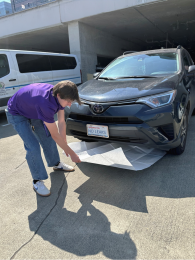
- Place cardboard or ground cloth under your vehicle to check for a leak. This works best when the car's engine is "warmed up" or has been driven for over ten minutes. Look for fresh drips after a few hours or leave it overnight to check in the morning.
- Request a “Vehicle Leak Check Sheet” from the City of Bellevue’s Stormwater Department at StreamTeam@bellevuewa.gov and send us your Bellevue address and we'll send you a leak check sheet and instructions (while supplies last).
- Keep cardboard, ground cloth or drip pan under your vehicle if there is a leak to keep fluids off our streets and prevent polluting our streams until you can get it repaired.
- Take your car or truck to a repair shop right away if you discover a leak.
What does the law say?
Bellevue Municipal Code 24.06.125 protects water quality for all of us with rules about keeping all types of pollution out of our storm drains and stormwater system. Including: petroleum products, including but not limited to oil, gasoline, grease, fuel oil and heating oil; chemicals; chemicals not normally found in uncontaminated water.
Property owners, businesses, and/or responsible parties of code violations may be subject to enforcement and penalties per Bellevue Municipal Code 24.06.130.
What does this law mean?
This means it’s against the law to allow car, truck, RV, or boat fluids to drip, leak or run into the street, storm drains or stormwater system. In addition, you may be fined if you are polluting.
Recycle your used motor oil and filters
If you are one of the many people who change their own motor oil, recycling used oil and filters is FREE for everyone at several automotive locations in Bellevue. Bring the used oil in a clean container. Remember the filter too: filters are drained and recycled.
Recycled used motor oil can be re-refined into new oil, processed into fuel oils, and used as raw materials for the petroleum industry. Motor oil does not wear out-it just gets dirty-and recycling it saves a valuable resource.
Learn more about Bellevue's Shift Green Program and about other items you can recycle.
- Smaller quantities of oil accepted (amount of an oil change):
- AutoZone, 15015 Main St.
- Greg’s Japanese Auto, 13421 NE 20th St. (No filters accepted)
- Len’s Automotive, 1620 136th Pl. NE
- O’Reilly Auto Parts – Eastgate, Factoria and Overlake
- Larger quantities of oil accepted (limit of 5-gallon containers and 25 gallons total per visit):
- Factoria Hazardous Waste: 13800 SE 32nd St. Bellevue, WA 98005.
More car care for local clean streams and lakes


Storm drains vs. the sewer system
Storm drains carry rainwater from surfaces and deliver it directly to Lake Washington and Lake Sammamish without being filtered or treated. Rainwater, or runoff, flows into storm drains, through a series of connected pipes, streams, culverts and ditches called our stormwater system. The system was created to prevent flooding in our neighborhoods and community.
The sewer system is a completely separate series of pipes that connect directly to homes and buildings collecting used water from our indoor drains and appliances, such as sinks, washing machines and toilets. The sewer system transports our used indoor water and sewage to a wastewater treatment facility where it is filtered and treated.
Report 24-hour emergencies and utilities maintenance

To report flooding, water main breaks, sewer overflows and pollutant spills, call our 24/7 hotline at 425-452-7840, or fill out the My Bellevue Customer Assistance Form on our website with the details. You can also download My Bellevue App to make a report and send us photos right from your phone.