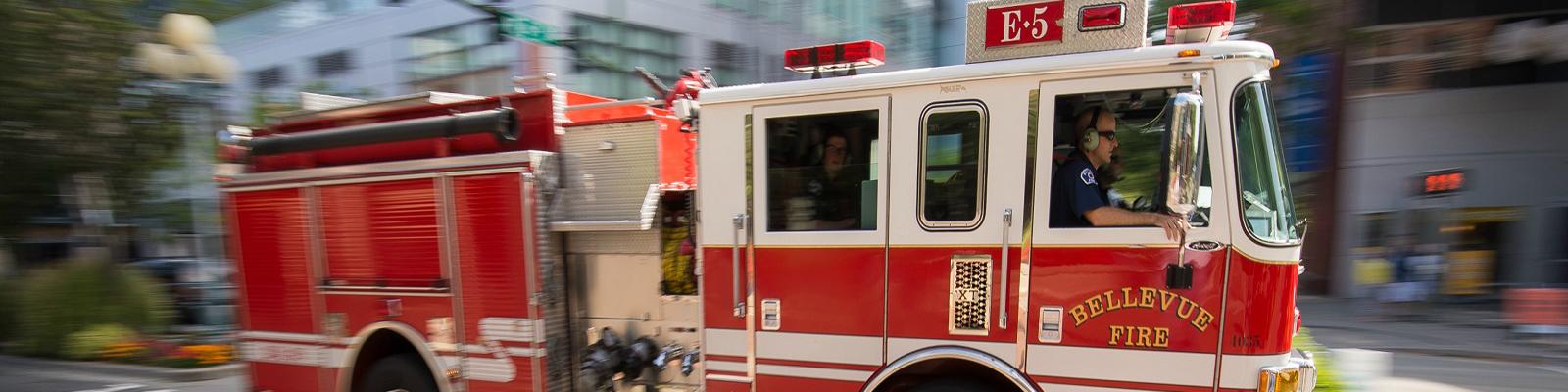
Bellevue, like all cities, is susceptible to a variety of different hazards, ranging from flooding and landslides to severe weather and earthquakes. While thinking of all the potential hazards can feel daunting, it is important to take steps now to help mitigate the impact of these disasters in the future. To better prepare for hazards the City of Bellevue has developed a citywide Hazard Mitigation Plan (HMP). This plan helps the city assess risks, identify vulnerable areas and put in place actions that can be taken to help reduce or eliminate the impact of the hazard in a disaster. Having a completed HMP allows the city to apply for grants, which can help fund mitigation measures, and assist in keeping people who live, work, play and study in Bellevue safe.
Hazard mitigation overview
Hazard mitigation is a crucial part of emergency management. Mitigation is the act of reducing or avoiding the impacts of disasters, including risk to life and property. Mitigation can keep natural hazards from having catastrophic impacts, which helps communities recover more quickly after a disaster occurs. Some examples of mitigation strategies include seismic retrofit of buildings and bridges, redundancy of water systems and fuel systems, and tree planting to reduce heat in urban areas.

A hazard mitigation plan forms the foundation of a community’s long-term strategy to reduce losses caused by disasters and break the cycle of damage and reconstruction. Through the process of creating this plan, the city will identify hazards, assess risks and develop mitigation strategies.
The 2026-2030 City of Bellevue Hazard Mitigation Plan was developed as part of a multi-year planning process using a FEMA grant and was approved by FEMA in November 2025. The final plan will be posted on the website once documentation is finalized.
Reference Plans
Emergency Management

For alternate formats, interpreters, or reasonable modification requests please phone at least 48 hours in advance 425-452-6807 (voice) or email OEM@bellevuewa.gov. For complaints regarding modifications, contact the City of Bellevue ADA, Title VI, and Equal Opportunity Officer at ADATitleVI@bellevuewa.gov.
The City of Bellevue assures that no person shall on the grounds of race, color, or national origin (including limited English proficiency), as provided by Title VI of the Civil Rights Act of 1964 and related statutes, be excluded from participation in, be denied the benefits of, or be otherwise discriminated against under any City of Bellevue program or activity. Any person who believes their Title VI protection has been violated may file a complaint with the City of Bellevue’s Human Resources Director. For additional information regarding Title VI complaint procedures and/or information regarding our non-discrimination obligations, please contact the City of Bellevue’s ADA, Title VI and Equal Opportunity Officer at ADATitleVI@bellevuewa.gov.