This information should not be construed as legal advice. Keep in mind that laws change frequently and vary by jurisdiction.
Let’s say you are putting your house on the market, and your realtor says your house needs “curb appeal.” So you pull out the blackberries by the drive, replace them with shrubs and beauty bark, and repaint your front door. Your curb is now appealing, maybe even the best in the neighborhood.
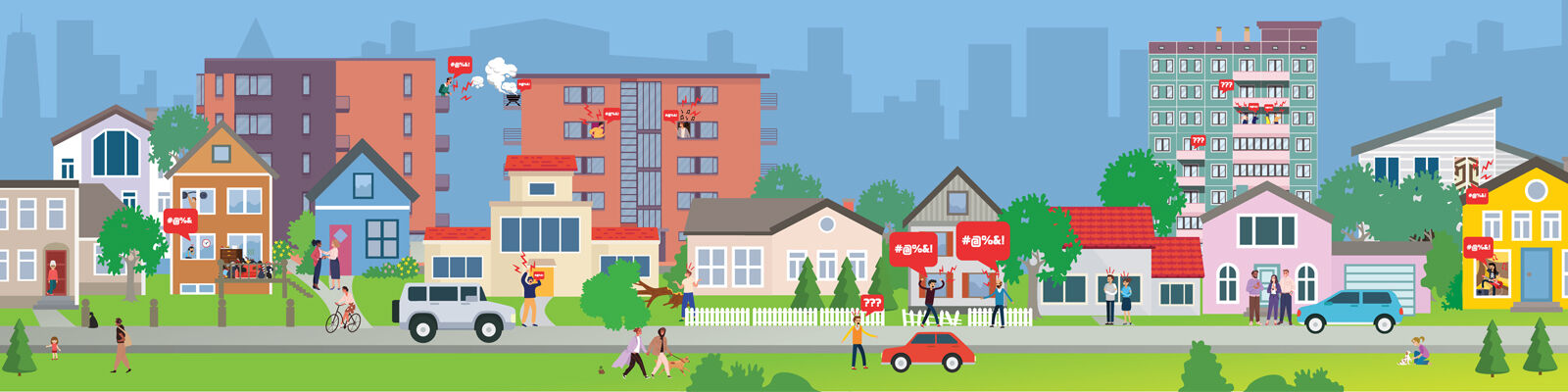
In fact, your neighborhood looks terrible! The people next door don’t seem to care that their yard is overgrown with weeds and sprawling bushes, and their compost pile is attracting rats. They also need to repaint their trim, hopefully not that same horrible shade of pink. And the house down the street has junk scattered all over the front yard, including an old refrigerator. They also have an old rusty car with a flat tire in the driveway, which doesn’t look like it runs. They could push the car into their carport, but only if they move the stuff out first. Would covering it with a tarp help, or would that just make it worse?
Is there anything you can do about all this? Are there laws governing these eyesores? Who do you call? Can anyone help you communicate with these people?
Bellevue City Code does have laws that deal with some of these eyesores. For example, Chapter 9.11, the AntiLitter Code, says that “The owner, occupant, or person in control of any private property or public place shall at all times maintain the premises free of litter…” The neighbor down the street may well be littering with all their junk.
But this law wouldn’t apply to the neighbor with the compost bin, which is exempt. Chapter 9.09, Abatement of Junk Vehicles, may apply to the neighbor with the old car. This law requires that vehicles need to be “operable” or else screened from view.
So, some of these neighbors may be violating the law. If so, why hasn’t the City done something about it? What good is a code that isn’t enforced? It turns out that these sections of the code are “complaint-driven,” meaning that nothing happens unless someone reports it.
But wait! Before you run to your phone, let’s think this through. Remember, some of those eyesores are addressed by the law, and some of them are not. Your neighbor can have as many overgrown shrubs as they want if they aren’t a traffic hazard, and it’s perfectly legal to have a yard-o-weeds. That ugly shade of pink? As they say in code compliance, “we don’t regulate ugly.” And the rusty old car? Put some air in the tires and, voila! It’s legal!
So, before you file a complaint, you might want to talk things over with your neighbors to see if you can persuade them to deal with the legal eyesores as well as the illegal ones. They may not be as open to talking after you have called Code Compliance on them. Even if you have only one concern, and it is clearly addressed by the code, the Code Compliance process may not get you what you want. You don’t care if the car runs. You care about how it looks.
In a negotiation, you can be clear about what you really care about. The owner of the rusty car might be willing to park it in the carport. You can also get creative in inventing solutions that benefit everyone. For example, you might be willing to have your landscaper cut your neighbor’s grass for a couple of months if they would be willing to repaint their trim. Your realtor says curb appeal may be worth thousands of dollars, so paying to cut the grass could be a real bargain.
Some things are not negotiable, like concerns about health and safety. Remember that old freezer in your neighbor’s front yard? According to the City Code, Chapter 9.10, Nuisances, the freezer is an “attractive nuisance” and “dangerous to children.” If your neighbor won’t deal with it, you should report it to Code Compliance for everyone’s sake. And what about that rat-infested compost pile? Chapter 9.10 also imposes fines for those who do not comply with a notice to abate a confirmed rat infestation. You may want to choose the enforcement route before the rats multiply.
If you want to find effective solutions to neighborhood eyesore problems, it helps to think through the options:
- Does the Bellevue City Code address this eyesore?
- If so, does the remedy that the City will impose address your concern?
- Do you have other concerns that Code Enforcement won’t address?
- Are there solutions that would benefit both parties?
- What kind of relationship would you like with this neighbor in the future?
- Are there health and safety concerns that are not negotiable?
If you decide that you want to negotiate with your neighbor, but aren’t sure how to start the conversation, call the Bellevue Conflict Resolution Center. We can coach you on how to talk with your neighbor, or we can talk to your neighbor for you to learn more about what is important to them and what solutions they might be willing to consider.