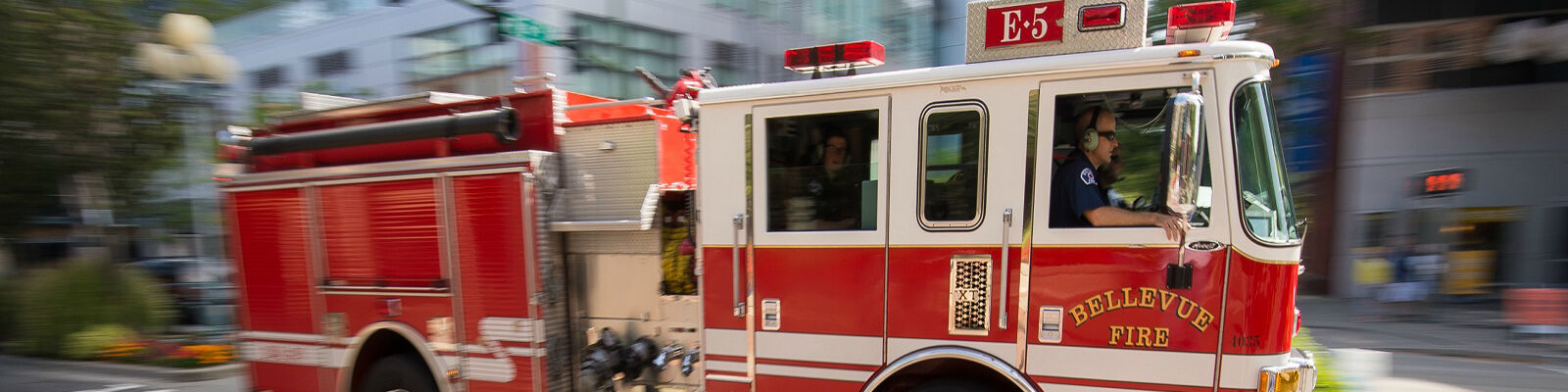
Residents and communities thrive when everyone takes an active role in preventing fires before they start. By staying aware of local hazards, preparing for emergencies and following safety guidelines, neighbors help create a safer environment for all. Fire prevention is not just an individual responsibility it is a collective effort that strengthens community resilience. When communities work together on mitigation and preparedness, everyone benefits from a safer, more connected neighborhood.
Smoke and Carbon Monoxide Alarms
Working smoke alarms and carbon monoxide alarms save lives. Install smoke alarms in every sleeping room, outside each sleeping area, and on every level of the home including basements. Larger homes may require additional smoke alarms to provide a minimum level of protection. For the best protection interconnect all smoke alarms throughout the home for the best protection so that when one sounds, they all sound.
Carbon monoxide alarms should be installed and maintained outside each sleeping area and on every level of the home. Follow the manufacturer instructions for placement and mounting height. Combination smoke and carbon monoxide alarms should follow the directions for smoke alarm installation.
Test your smoke alarms and carbon monoxide alarms at least once a month and replace them if they fail to respond. Some alarms have replaceable batteries that need to be changed twice a year while others have a built-in, long-lasting battery that can last up to 10 years.
Evacuation Planning
In the event of a fire or other emergency every member of your home needs to be able to evacuate safely. Young children or those with mobility impairments may rely on others to evacuate safely. Create a plan with your household, choose a meeting point in front of the building, and practice evacuating at least twice per year.
For those living on upper floors or in high rise buildings ask if your building has a phased evacuation alarm system. If so, evacuate at least 4 floors down or until the fire alarm is no longer sounding. Stairwells and designated areas of refuge can be used for those unable to evacuate completely. If you shelter in place in a stairwell or area of refuge remember to call 911 and advise the dispatcher of your location and evacuation status. For more information read the High Rise Emergency Handbook.
Cooking Safety
Cooking fires account for nearly 50% of residential home fires in the United States each year. Unattended cooking is the leading factor in cooking fires. To prevent cooking fires, you must be alert meaning you are not sleeping, have consumed alcohol, or have taken medicine or drugs that make you drowsy. Be sure to follow these essential safety tips.
- Stay in the kitchen when you are frying, boiling, grilling, or broiling food.
- Keep anything that can catch fire–oven mitts, wooden utensils, food packaging, towels, curtains–away from your stovetop. Never use your oven or microwave as storage space.
- Keep the stovetop, burners, and oven clean.
If you have a cooking fire it is imperative you never pour water on a cooking pan grease fire. Always keep the lid nearby when you are cooking. If a small grease fire starts in a pan, smother the flames by sliding the lid over the pan. Turn off the burner. Do not move the pan. Leave the lid on until the pan has cooled. In case of a fire inside an oven or microwave, turn off the heat or power and keep the door closed until it is cool. Do not open the door until you are confident the fire is completely out. After a fire, the oven or microwave should be checked by a licensed professional and/or serviced before being used again.
When in doubt, just get out! When you leave, close the door behind you to help contain the fire. After you leave, call 9-1-1 from a mobile phone or trusted neighbor's phone.
False Alarms
Working smoke alarms save lives, but if they go off too often for no reason people start to ignore them. This is called "alarm fatigue." When that happens, people may not evacuate quickly during a real fire. False alarms also keep firefighters from responding to other emergencies.
To prevent false alarms:
- Vent smoke and steam only through exterior doors and windows.
- Smoke or vape outside in designated areas. Extinguish cigarettes in an approved container.
- Ensure smoke alarms are installed per manufacturer recommendations. Check the back of your smoke alarm to see what type of alarm it is, when it expires and to make sure it is certified by a Nationally Recognized Testing Laboratory.
Wildfire Preparedness
Western Washington has a long history of wildfires that kept forests and natural lands healthy and biodiverse. Bellevue is proud to be A City in a Park, but this means that residents need to be aware of wildfire risks and areas of vulnerability like the wildland-urban interface (WUI).
Over 90% of home ignitions during a wildfire occur from embers that can travel on the wind miles away from the actual fire. The King County Wildfire Ready Toolkit explains the most effective mitigation efforts such as:
- Remove vegetation located within 5 feet of your home.
- Inspect and remove flammable debris from your roof and gutters.
- Cover all home ventilation openings (except dryer and plumbing vents) with 1/8-inch metal wire mesh screens or install ember-resistant vents.
- Replace wood shake or shingle roofs with a Class A fire-rated roof such as composition asphalt shingles, metal, or tile. Repair or replace damaged roofs so there are no gaps in the roof covering.
- Ensure there is a minimum of 6 vertical inches of noncombustible siding material around the base of the home, measured from the ground up and from any attached surfaces such as decks.
- Remove anything combustible from the surface or underneath decks and deck stairs including vegetation such as grass and weeds.
- Remove combustible fencing and gates within 5 feet of the home.
Make sure that you are prepared to evacuate by being 2 Weeks Ready. This includes having an evacuation plan, a communication plan, and an emergency kit that is designed for your family.