This page offers a detailed guide to all the components of our council meetings, explaining each of the items usually listed on a meeting agenda. The council meeting agenda is generally published every Thursday afternoon prior to the meeting the following Tuesday.
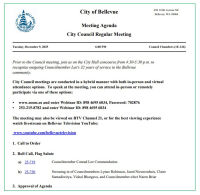
Agenda Items Explained
-
Call to Order
- The mayor (or deputy mayor in the mayor’s absence) presides over council meetings and, after determining a quorum is present, calls the meeting to order.
-
Roll Call, Flag Salute
- The city clerk takes roll call of all the councilmembers. A member of the council leads the pledge of allegiance, inviting those in attendance to join in.
-
Approval of Agenda
- Members of the council or the city manager may suggest adding, withdrawing or moving items’ order on the agenda. The agenda may be amended if a simple majority vote for it.
-
Oral Communications
- The public is invited to comment on topics related to city business. Each person making comments is given three minutes to speak.
-
Reports of Boards and Commissions
- Updates from city board and commission members
-
Report of the City Manager
- Update from the city manager about a specific item
-
Council Business and New Initiatives
- New items brought up by councilmembers and/or appointments to city commissions and boards
-
Consent Calendar
- Routine and non-controversial matters of business are placed on the consent calendar and typically all are approved or adopted in a single council motion.
-
Public Hearings
- Public hearings may be held for certain council matters, giving people the opportunity to provide direct input to the council regarding those matters.
-
Study Session Items
- Often before the council takes action on significant policy issues, background about the issues is presented as study session items. Regular updates about city programs, progress reports and presentations from the city manager or regional officials also c
-
Land Use Reports
- The council discusses and takes action on land use matters, including Hearing Examiner's decisions and recommendations on various land use applications, as well as appeals. Often these items are quasi-judicial, with the council required to make a judgment
-
Other Ordinances, Resolutions and Motions
- Legislation for final action/council to make decision
-
Written Reports
- The council receives updates or progress reports on initiatives, plans and programs in written format.
-
Unfinished Business
- Items from a previous meeting that needs further discussion and action
-
New Business
- New items presented to the council for discussion
-
Executive Session
- The council occasionally will leave the chamber to meet in private for discussions related to issues including personnel, property acquisition and litigation.
-
Adjournment
- The council formally ends the meeting.