The project remains on hold while the team completes additional analyses related to fire flow and associated design considerations. Due to the complexity of this work, the evaluations have taken longer than anticipated. We now expect to determine the final project outcome by Oct. 2026.
We appreciate the community's continued engagement and patience. Once the analysis is complete, we will share the outcome, including whether the project will proceed and any changes to the scope.
The project team is available to meet with you or come to your next community event. The project team will share the latest project information and discuss impacts to the community. To schedule, contact Project Manager, Prabhat Karna at pkarna@bellevuewa.gov. Frequently asked questions are also answered at the bottom of this page.
The City of Bellevue Utilities Department is starting a project to improve fire flow and water pressure in the Somerset Highlands neighborhood. This work includes installing:
- Installing a new 12-inch ductile iron water main on SE 49th Street from 151st Ave SE to Highland Dr.
- Installing new pressure Reducing Valve Station Vault at the intersection of SE 49th St and Highland Drive.
- Installing two new 8-inch ductile iron water mains on Highland Drive from SE 49th Street to SE 47th Pl.
- Replacing existing AC water mains with new Ductile Iron pipe within the intersection of SE 47th Pl and Highland Dr.
This work also includes the installation of up to 108 Individual Pressure Reducing Valves (IPRVs) at select properties on the hillside adjacent to the west of Highland Drive. These valves are needed to keep water pressure safe for residents after the pressure is raised in the water system to improve fire flow. The IPRVs will be installed behind the water meters of each property and will be installed before the pressure is increased in the water system. Locations of IPRVs are shown in the map below. Some work will require access to private property, and the City will contact affected property owners in advance for permission and coordination.
Background
During a fire, the Fire Department relies on the water system to deliver flow to hydrants. “Fire flow” refers to the volume of water that can flow from a hydrant without losing too much pressure. The city continuously evaluates its water system for opportunities to improve water service, including flow, pressure and reliability.
Because of the steep topography in the project area, the water system relies on a series of pumps to bring the water up the hill, creating different pressure “zones” based on local elevation. Water pressure and fire flow can vary throughout each of these zones. The city is working systematically to make improvements so that all customers have the same minimum level of service.
In 2021, the city conducted community outreach to determine how to best improve fire flow and serve the community. The project team studied numerous design options and identified a preferred alternative: a new water main along Southeast 49th Street between 151st Avenue Southeast and Highland Drive, PRV station, and new water mains along Highland Dr. The current CIP will complete Design and Construction of this alternative.
Project location
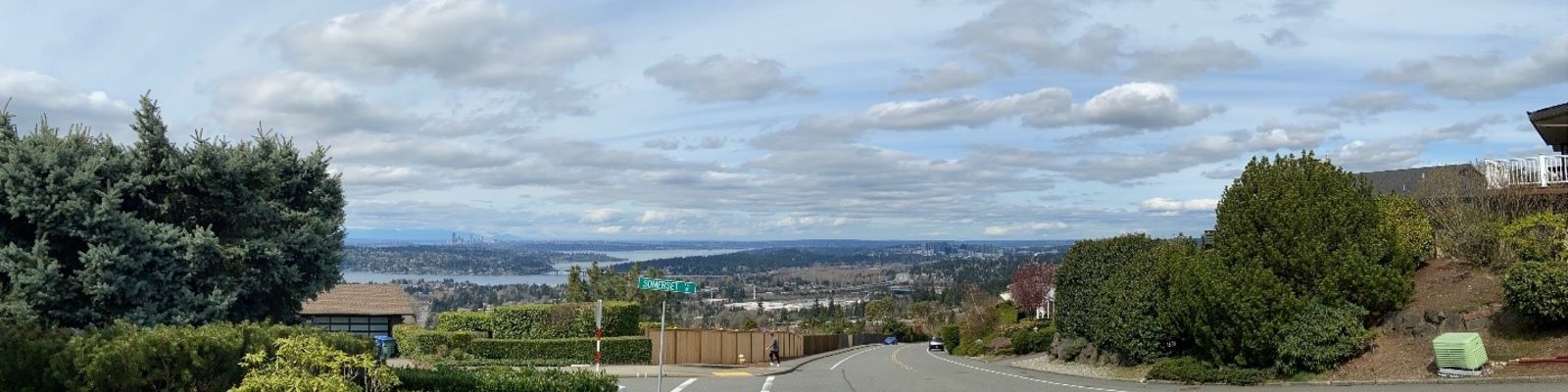
The project is located in the Somerset Highlands neighborhood (see map below).
- 12-inch water main – along SE 49th St
- Two 8-inch water main – along Highland Dr
- PRV station – intersection of SE 49th St and Highland Dr
- AC main replacement – intersection of SE 47th PL and Highland Dr
- Up to 108 IPRVs : highlighted area to the west of Highland Drive


Timeline
The project is currently in the design phase.
- Fall 2026: Complete design, permitting, and IPRV agreements
- Winter 2026: Project goes to bid for Construction
- Early 2027: Construction begins
- Late 2027: Construction ends
Public engagement
The city is working to engage and notify residents who may be impacted by this project, to understand and support community needs to the extent possible. We will continue gathering input throughout this project.
Online Open House:
In July of 2021, the city held an online open house, sharing and collecting input on proposed design alternatives. The results of the analysis can be found:
Q. How has the city engaged the impacted residents on this project?
The City uses several methods to inform and engage residents about utility projects, including mailed postcards and letters, direct outreach, and a publicly available project webpage. For this project, information has been shared through mailed notices and this project website. These tools are intended to ensure residents can access project details at any time, including new homeowners who may not have been present during earlier outreach. The Project Manager, Prabhat Karna, remains available to answer questions and provide additional information upon request.
The project team hosted a Community Open House on Feb. 12 to answer community member questions and provide an update on the project's current status.
Q. What is the current status of the project?
This project was planned to address long-term fire flow and water system reliability needs identified through system evaluations and updated standards. While some infrastructure may have been installed years ago, changing conditions, updated fire flow requirements, and system performance reviews can lead to improvements being scheduled later.
Although construction was planned to begin in January 2027, the project team is currently re-evaluating the project, including reviewing fire flow requirements and community feedback, before determining next steps. Once a decision has been made, the City will promptly communicate the outcome, including whether the project will proceed, any changes to its scope, and the reasoning behind the decision.
Q. What improvements were planned in this project?
The project includes a combination of new and replacement water mains to improve fire flow and overall system performance:
- SE 49th Street: Installation of a new 12-inch water main
- Highland Drive: Installation of two new 8-inch water mains
- Intersection of SE 49th St and Highland Drive – Installation of a new PRV station
- SE 47th Place /Highland Drive SE intersection: Replacement of existing 8-inch and 10-inch asbestos-cement mains with new 8-inch and 10-inch ductile iron mains
- West of Highland Drive –New Individual PRVS (IPRVs) at select properties to protect from high water pressure
Q. What is the current water pressure in the neighborhood?
Current pressures within the neighborhood vary significantly depending on ground elevations where each property is located. Initial water pressure readings taken during the project design phase show water pressures ranged between 30 psi to over 100 psi.
Q. How would the project ensure adequate fire flow and pressure?
The improvements were designed to meet required fire flow standards while keeping household water pressure within safe operating limits. After construction, system performance will be evaluated to confirm that fire flow and pressure requirements are met.
Q. Why not use a pump station instead of water main upgrades?
The City evaluated 11 different alternatives, including pump station option. Each option was carefully compared using a Triple Bottom Line analysis, which considers community impact, environmental factors, and long-term operating costs and benefits. Based on this evaluation, upgrading the water mains was identified as the most effective and reliable long-term solution and was advanced through design. Public outreach was also conducted as part of the alternatives evaluation process to help inform the final decision.
Q. Why are individual pressure reducing valves (PRVs) installed on the homeowner’s side of the meter?
The installation of individual pressure reducing valves (IPRVs) follows the City’s established policy. Installing PRVs on the private side of the meter allows pressure to be managed at each home while maintaining consistent system operation across the neighborhood.
Q. Would installing PRVs on the City’s side of the meter protect the water meter?
The City’s current policy places PRVs on the private side of the meter. Water meters are designed to operate safely within system pressure standards, and pressure management for individual properties is handled through IPRVs.
Q. Would there be enough space for the PRV installation?
Yes. A separate valve box will be installed behind the existing water meter box to accommodate the PRV. This new box will be located on private property.
Q. Why are PRVs installed outside near the water meter instead of inside a home?
Installing PRVs inside private garages or crawlspaces can present significant variations in access, plumbing configurations, permitting requirements, and installation costs from home to home. To ensure consistency, safety, and efficiency across the project, it is an operational standard to install PRVs outside in accessible meter-adjacent locations. This approach aligns with industry best practices for public water system improvement projects and allows for safer installation and future access if needed.
Q. What type of pressure reducing valve would be installed?
The City will install PRVs that meet its engineering standards and performance requirements for durability, reliability, and operation in outdoor conditions. All valves are selected to function in damp and cold environments typical of the region.
Q. What water pressure level requires a PRV?
A PRV is required when the static water pressure exceeds 80 psi.
Q. Why are homeowners responsible for notifying future property owners about the PRV agreement?
Because the agreement does not create a permanent easement, it is not recorded with King County. Instead, homeowners are asked to notify the City project manager and future property owners so the City can provide information and support as a courtesy and ensure new owners are aware of the PRV.
Q. How does the City address concerns about long-term responsibility?
The City understands that changes to private plumbing systems raise important questions about responsibility and maintenance. The approach used for this project is consistent with City policy and past practice for individual pressure reducing valves. The valves installed meet City standards. City staff remain available to explain how the system works and what homeowners can expect.
Q. Is there any cost to property owners for the City to install a PRV?
No. The City would install the required individual pressure reducing valves (PRVs) at no cost to affected property owners as part of this project.
Q. Who would install the PRVs?
A construction contractor, awarded the contract for the overall project, would install the individual pressure reducing valves (PRVs). All work would be completed in accordance with the City’s approved plans, specifications, and contract requirements.
Q. Any follow-up service to be included in the installation in case the installation is not done correctly that it may need adjustments?
Yes. For one year after installation, the City would repair or replace any malfunctioning PRV components installed by the City’s construction contractor. After the one-year period, the PRV becomes the responsibility of the property owner, including ongoing maintenance and any future replacement.